About Me
Hi, I'm Gwyneth Chou. My last name probably gave it away — yes, I'm Asian. Born and raised in Taiwan, in a family traditional enough that my grandma simply likes boys more than girls (I mean it makes sense… she had only dated guys).
My parents got divorced when I was in first grade, which meant a lot of quality time with grandma. Her way of showing love? Let's just say it wasn't really my love language. (Less hugging, more lecturing. With bonus posture corrections.)
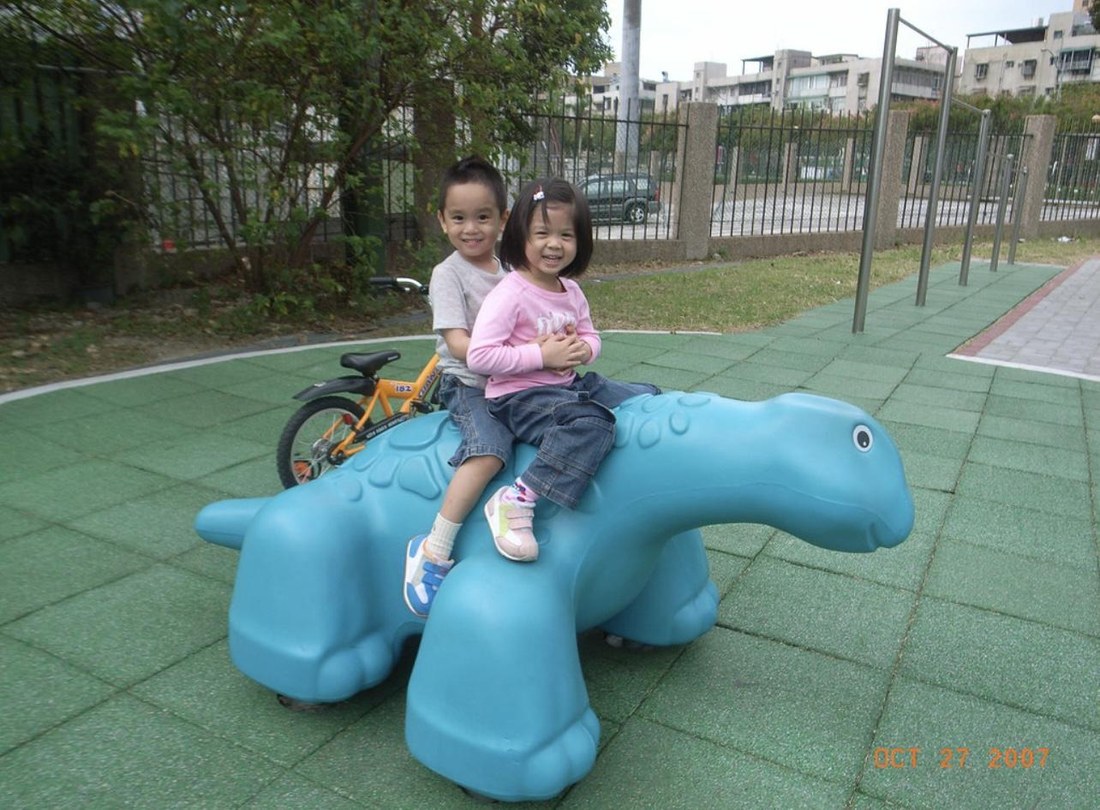
Then there was my older brother, the original influencer of my life. Thanks to him, my childhood toy box looked less like a "princess castle" and more like a "tactical operations unit": Legos, dinosaurs, police cars.
When I wasn't playing pretend to be a velociraptor cop, I was deep into anime, American movies, and Korean dramas. I used to think people who chase fictional worlds for comfort are just emotionally fragile little goblins like me. (Possibly still true. Possibly fine.)
When grandma's lectures were on full blast and the pressure to behave was suffocating, fiction was the one place I could actually breathe. Stories gave my imagination a passport. I'd project my dreams onto characters and live entire alternate lives between episodes.
Naturally, I started worshipping the wizards behind the curtain — the artists, the writers, the directors, the people who frame the worlds I loved escaping into. They must be impossibly creative, impossibly successful, impossibly happy, right? I wanted it. So I kept daydreaming about it.
And then reality threw a plot twist.
I remember watching my favorite K-pop idol collapse on stage. The diagnosis was hypoglycemia and sleep deprivation. The internet promptly caught fire debating K-pop culture, and I sat there under mid-existential-crisis.
The people I'd been idolizing as the creators of joy weren't actually in charge? What if the singers, dancers, and actors are just as boxed in as the rest of us? What if there's a much bigger machine deciding what the audience wants, and the performers are just feeding it?
(What if I am controlled by a bigger force from a five-dimensional universal space?)
The space I run to for escape might be the exact place someone else is desperate to escape from.
Funny how perspective works.
So maybe, before I keep daydreaming about running away into fictional worlds, I should actually talk to my grandma. Like, with my mouth. Out loud. (Terrifying. I'll keep you posted.)
And maybe, before I throw myself into the entertainment industry, I should peek behind the curtain a little harder.
Turns out growing up isn't about choosing between the dream and the reality. It's about figuring out where the dream ends and the human starts.
So today, let's dive into…
The K-Pop World
The "production" I want to analyze isn't one specific song or music video — it's the K-pop idol industry itself. The big shiny machine. The images were of youth, beauty, and military-grade choreography. The languages were Korean, English, Japanese, and sometimes Mandarin. The narrative was unambiguous: Korea is exporting joy to the world, and you, the viewer, should join in.
That's the message on the surface. The fun of doing cultural analysis is seeing what's underneath.
Let's pull the curtain!
1. The Marxist Lens: Your Fave Is a Product
Quick recap from class: Marx said that under capitalism, people and their labor get turned into commodities — things you can buy, sell, and trade. Late-capitalism theorists basically said, "it's selling personalities, feelings, and entire identities."
K-pop is the textbook example.
Think about how it works. Trainees often sign with agencies in their early teens. They live in dorms, get weight-monitored, get dating-banned, and have their public personas built like a marketing deck. The stage name and the hair styling are all branding. The Midnight Media Musings blog (2016) makes a related point about authenticity: the "real me" the idol shows you is itself a category the marketing team approved.
Marx had a word for this feeling — alienation. It's what happens when workers can't see themselves in what they make because the thing they made belongs to someone else. K-pop idols are in an extreme version of this: the thing they're making is themselves. Their faces, their voices, their crying-on-stage moments — all of it is a product, all of it generates revenue, and most of it isn't theirs to control.
You can hear the alienation crack through sometimes, in tiny moments. Lee Hyori, the first-generation K-pop idol, has publicly stated that she would not want her own child to become a singer.
The woman who built the lane is telling you she wouldn't wish the lane on someone she loves. That's a worker telling you what the working conditions are actually like.
2. The Postcolonial Lens: How K-pop Even Got Here
Postcolonial theory asks: how did the global cultural map get drawn the way it did, and whose hand was holding the marker? Because K-pop didn't just spawn out of nowhere.
After the Korean War, South Korea became one of the United States' big anti-communist allies, which meant a lot of American things: military bases, economic aid, and radio, film, R&B, hip-hop, rock. Korean pop in the late twentieth century soaked all of that in.
By the time the internet and satellite TV came around in the 90s and 2000s, Korean entertainment companies had figured out something clever: take the Western pop template, polish it within an inch of its life, add Korean industrial discipline, and sell it back to the world.
The postcolonial lens also catches something a little uncomfortable: idols get conscripted as soft-power diplomats whether they want the job or not. In May 2022, BTS visited the White House to talk about anti-Asian hate with President Biden. A state-to-state photo op in which seven young men whose public images are tightly managed by HYBE were deployed as instruments of diplomacy. Compare that to a Taylor Swift or a Beyoncé. Western celebrities of comparable stature choose whether to take a White House meeting, and they weigh the political risks publicly. K-pop idols generally don't have that freedom in the same way. Their political speech is filtered through agencies that have very strong opinions about not annoying the Korean state, the Chinese market, or any large fan bloc that might trend a hashtag the wrong way.
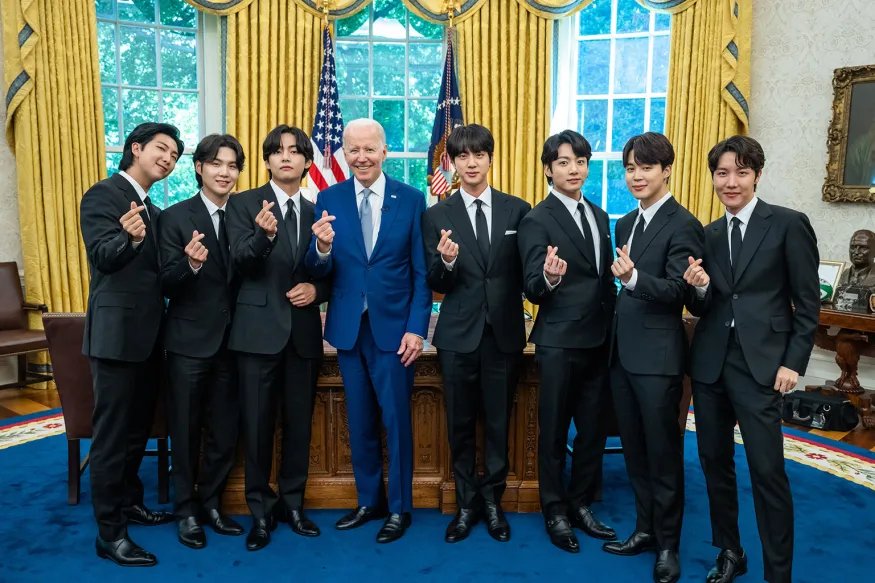
When idols have spoken up about feminism, labor conditions, or LGBTQ+ rights, they've taken hits, and their companies haven't always had their back. Even though the idol's voice as ambassador gets a microphone, the idol's voice as a citizen often does not.
3. The Postmodern Lens: Okay, But Also K-pop Slaps
I don't want to leave this post degrading the amazing stuff done by these shining K-pop stars.
K-pop, read through a postmodern lens, is doing some genuinely cool things, and we should say so.
Postmodernism breaks through the strict hierarchies of high art vs. low art, real vs. fake, East vs. West, serious vs. silly. K-pop just doesn't believe in those walls. A single music video will include baroque painting, cyberpunk anime, Y2K fashion, Afro-diasporic dance, traditional Korean color symbolism. Fredric Jameson described this as the postmodern condition, and K-pop performs it with such craft and joy that it stops feeling like collapse and starts feeling like a love language.
K-pop has stripped off some really nasty stereotypes. Western pop culture has historically painted Asians as boring, conformist, sexless or hyper-sexual, technically competent but never cool. K-pop has personally dragged that image into the street. Audiences who would never have clicked on "an Asian artist" now know choreography by name and learn Korean lyrics phonetically in the car.
Young Asian and Asian-diasporic fans have grown up watching Asian performers occupy the center of the global pop frame as comedic geniuses and as full people. That's not a small thing. That changes who kids in the mirror think they're allowed to be.
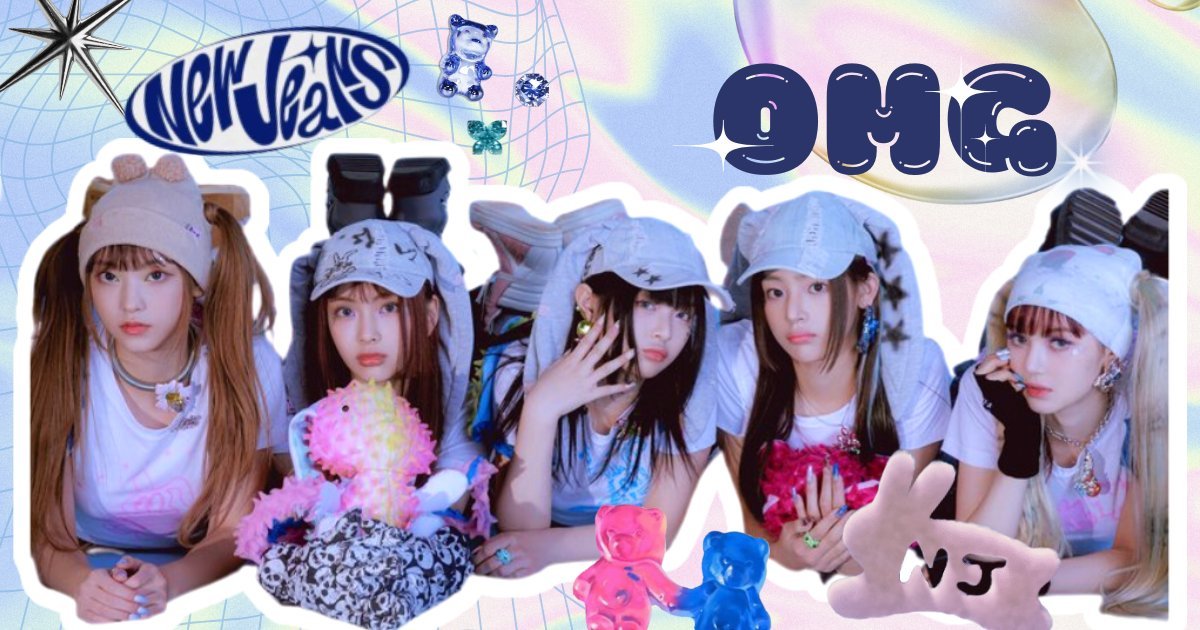
K-pop also messes beautifully with the "high art vs. mass art" wall. Multi-million-dollar music videos are doing cinematography that would not be out of place at a contemporary art biennial. Fan analysis videos read these texts with the kind of attention that used to be reserved for literature seminars. The fandom itself is a postmodern creature.
The product is commercial, sure. But the meaning made around it is not fully owned by any agency. Fans rewrite, reinterpret, ship, meme, and remix. That's culture, not consumption.
Holding It All At Once
None of these three readings cancels the others. K-pop is, at the same time, a hyper-efficient capitalist machine that turns kids into product lines; a postcolonial cultural form whose global reach is tangled up with American hegemony and Korean state strategy; and a postmodern practice that has actually changed who gets to be a global pop star and what global pop is allowed to sound like. Being a fan doesn't mean ignoring the first two. Being a critic doesn't mean ignoring the third.
If there's a thread running through all three, it's this question: whose voice are we actually hearing when an idol takes the stage?
The job of being a thoughtful fan, I think, is to keep all three of those things audible at the same time. Lightstick up. Eyes open.
And talk to your grandma. (Eeee..)
Cited Sources
ICDS. "The Capitalist Control of K-pop: The Idol as a Product." International Centre for Defence and Security. icds.ee/en/the-capitalist-control-of-k-pop-the-idol-as-a-product
Midnight Media Musings. "K-pop, Authenticity, and Culture." January 31, 2016. midnightmediamusings.wordpress.com/2016/01/31/k-pop-authenticity-and-culture
r/communism. "The Late Capitalism of K-pop: Taking a Look at the Idol Industry." Reddit, 2018. reddit.com/r/communism/comments/8zbtse